How Hospitable Scaled to 5 Full-Time Marketers Using Divisional Talent as a De-Risking Strategy
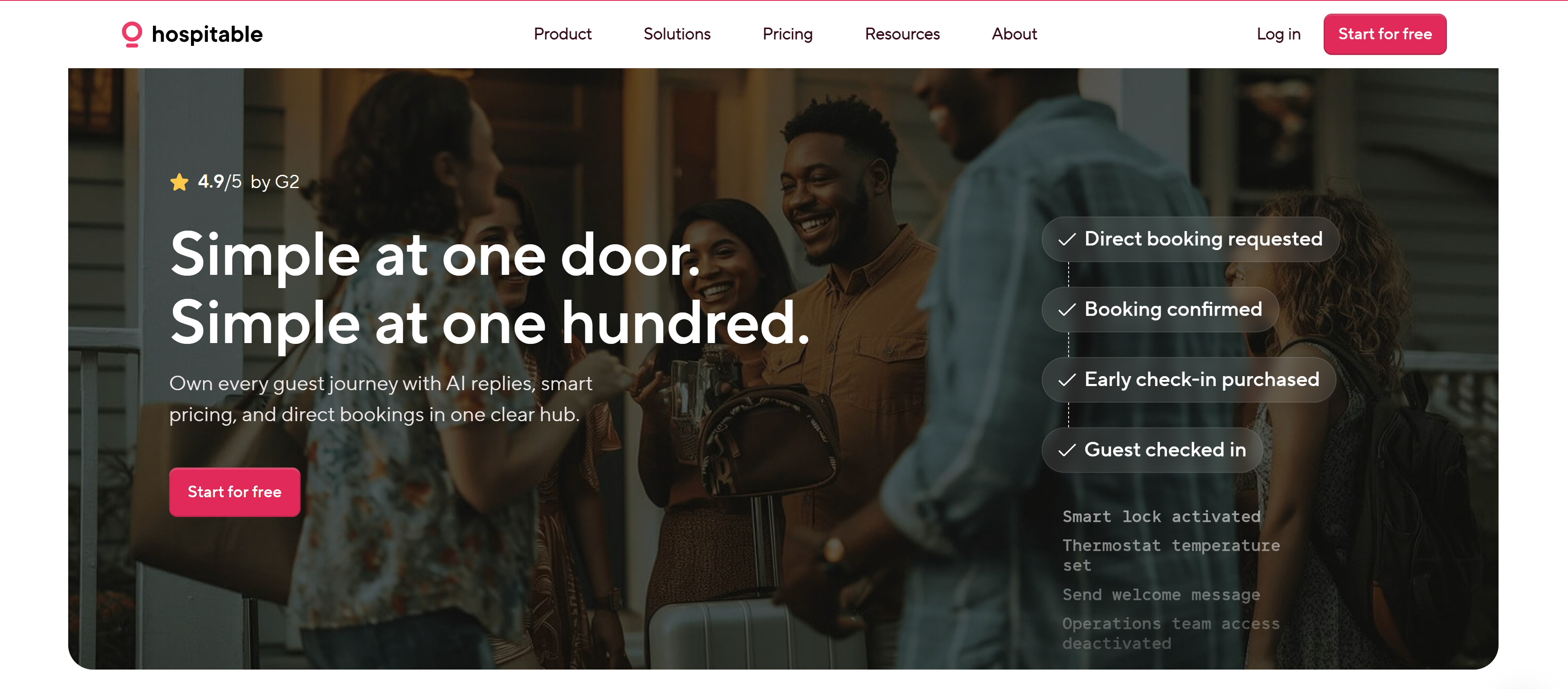
When Miles joined Hospitable as their first Head of Marketing, he inherited an agency relationship and zero internal marketing team. Two years later, the marketing team has grown to six people—five full-time marketers plus one key hire who started fractionally—and the customer base has doubled to over 19,500 subscribers. That first fractional hire became a core part of the team's success. Here's how Hospitable used fractional marketing to scale their team without the typical hiring risks.
The Marketing Leader Stuck in Execution Mode
Miles had a problem that most new marketing leaders face: he was supposed to be building strategy and growing a team, but he was spending most of his time executing.
When he joined Hospitable as their first Head of Marketing, the property management software company had no internal marketing department—just an agency handling everything. His job was to build that function from scratch while the company scaled.
"I had to do a lot of the execution myself as we built out our team and found the right people," Miles explains. "I was doing a lot of executing, less of the strategy and management side of things."
Hospitable serves an unusual dual market: individual Airbnb hosts managing one or two properties alongside larger property management companies handling hundreds or thousands of units. The company had been growing organically through social media and word-of-mouth, but they needed a more systematic marketing engine to support their growth trajectory.
Miles had hired a few specialists—someone for social media, another for blog content—but still had gaps on the team. Events were particularly important to Hospitable's growth strategy, both industry conferences and online webinars, but coordinating everything while managing the broader marketing strategy was stretching him too thin.
He needed help, but the challenge was figuring out what kind of help made sense at their stage.
Why Fractional Made More Sense Than a Full-Time Hire
When Miles started evaluating options to fill the gaps in his marketing team, he had to weigh several paths forward.
The agency he'd inherited covered broad responsibilities but couldn't provide the focus and initiative that certain marketing functions required. They were generalists trying to handle everything, which meant nothing got the specialized attention it needed.
"The agency had a wide arena of marketing help," Miles explains. "A fractional marketer gave us a key focus area with specific tasks that we needed to do very well."
A full-time hire solved the capacity problem but came with major drawbacks. The recruitment process takes time—something Miles didn't have while executing daily marketing tasks. Full-time roles also require clearly defined, scoped responsibilities that can justify 40 hours per week.
Miles and his team were still figuring out exactly what a full-time events and community role would look like. As the business scaled, it felt premature to lock in full-time positions before they'd validated what those roles truly needed to accomplish.
With a fractional marketer, they could bring in specialized expertise for a target area without needing to fill full-time hours. If it didn't work out, they could adjust quickly. If it did work out, they'd have de-risked a potential full-time hire.
"We could break that work into a smaller role that a fractional marketer could handle," Miles explains. "And down the line, we could consider if we needed a full-time position for it as well."
Is Fractional Right for Your Team?
Fractional works best when you have:
Evolving structure — Team roles still being defined and validated
Specialized needs — Specific expertise (not generalist help) required
Scope uncertainty — Not ready to commit to full-time before proving the need
Budget constraints — Need senior expertise without FT salary commitment
⚡ Bonus: Extended "interview" eliminates hiring risk before FT commitment
When Divisional presented Tatiana's profile, the match was clear. She had deep experience in event marketing and podcast production—exactly the specialized skills Hospitable needed—and she'd worked across multiple companies, giving her the ability to adapt and embed quickly.
Embedding Into the Team Despite Limited Hours
The engagement started in December 2022 with two primary focus areas: scaling Hospitable's event presence and taking over podcast production from the agency.
"Events have always been a favorite part of what I was doing," Tatiana explains. "There was a lot of execution, but that task was always just get it done, organize it, make sure that nothing gets dropped because usually there are a lot of people involved, a lot of processes."
Before Tatiana joined, Hospitable attended industry conferences but often "just turned up and went through the motions," as Miles puts it. The podcast existed but was managed externally with limited brand integration. User events were sporadic.
Tatiana's initial scope included three key initiatives:
Expand conference attendance: Increase the number of industry events Hospitable attended while improving preparation and execution at each one.
Launch Hospitable's online conference: Create their first user conference—an online event that would bring the community together and establish Hospitable as a thought leader in the short-term rental space.
Take over podcast production: Move the Hospitable Hosts podcast in-house, handling editing, show notes, descriptions, and all production logistics.
The difference between working with Tatiana versus the agency became quickly apparent. "She very much got embedded into the team and how we did things," Miles recalls. "She was very close to the team and understood our way of working very quickly."
While Tatiana had other fractional clients, she was able to fully focus on Hospitable during her committed hours.
"I could describe and pitch something that we wanted to work on, and she'd get it straight away. Whereas with the agency, they'd go away, ruminate, come back with their idea of what they thought they understood, and it wouldn't necessarily match."
— Miles, Head of Marketing at Hospitable
The results came fast. The first online Hospitable conference in January 2023—just one month after Tatiana started—generated over 1,000 registrations and received enthusiastic feedback from attendees.
From 20 Hours to Core Team Member

What started as a focused, part-time engagement evolved as Tatiana proved her value and Hospitable's needs expanded.
"If I saw that there was a space where I could contribute, I would just come to Miles with some ideas," Tatiana explains. Her full-stack marketing background meant she could see opportunities beyond her initial scope—and she wasn't afraid to suggest taking them on.
Miles recognized the advantage this created. "Obviously with the fractional piece, Tatiana was essentially on a very long interview. The whole time working as a fractional marketer, she's been able to prove herself in the role," Miles recalls.
When opportunities emerged—like managing Hospitable's integration partner relationships—Miles didn't need to launch a lengthy recruitment process. He already knew Tatiana could handle it because he'd watched her work for months.
The evolution happened in stages:
Year one: Events, conferences, and podcast production at approximately 20 hours per week
Expanding scope: Added the Host and Toast user meetup series—intimate gatherings of Hospitable users in different cities that fostered community and created face-to-face connections with the team
Partner marketing: Took on coordination with Hospitable's integration partners, ensuring organized collaboration across the ecosystem
Increased capacity: Hours grew as responsibilities expanded, eventually transitioning into a core team member role
"It was flowing frictionlessly for me," Tatiana reflects. "I was part of some teams where things weren't so easy, in terms of interpersonal dynamics. I really enjoyed working with the Hospitable team. The people are great."
Tatiana's early wins continued to grow:
- 50% growth in podcast listens and downloads in the first year
- Significant improvements in the strategy and organization of conference attendance
- Organic user meetups grew from the connections made at Host and Toast events
- 3x growth in the marketing team, from two people to six people today under Miles's leadership (five full-time marketers plus Tatiana)
- 100%+ growth of Hospitable's customer base to over 19,500 subscribers managing 70,000-80,000 properties monthly
"Not only did we do more events, but they were much more impactful. We went there with a strategy and focus, making sure we were getting a lot more out of each event."
— Miles, Head of Marketing at Hospitable
What Made This Actually Work
The success wasn't accidental. Both sides approached the engagement with practices that enabled trust and impact despite limited hours.
Miles's leadership approach:
From the beginning, Miles treated Tatiana like a full team member rather than a contractor. She participated in team channels, communicated openly across the organization, and had visibility into broader company strategy.
More importantly, Miles set clear priorities and managed expectations realistically. "Before we even looked at a fractional marketer, we looked at building out the job spec for someone that would be doing this role full-time," he explains. "We then asked ourselves: what are the real priorities with this task? What's the really meaty thing that is actually going to drive the business forward?"
This meant that Tatiana always knew what mattered most to Hospitable. If she ran out of hours during a busy week, she would have already completed the highest-impact work.
"Even if it does get to the end of the week and she doesn't have enough hours left to work on a few things on that list, at least she started the week working on the stuff that's really high priority," Miles says.
Managing Fractional Marketers for Maximum Impact
Miles's approach to getting the most from limited hours:
1. Map the full-time role first — even if you won't hire FT yet
2. Identify the "meaty thing" — what actually drives business forward?
3. Prioritize ruthlessly — highest-impact work happens first each week
4. Calibrate after month one — establish feedback loop on capacity
Result: Tatiana always completed critical work, even in busy weeks
They also established a feedback loop early. After the first month or two, they'd calibrated well enough that Tatiana could flag when she had extra capacity or needed to prioritize differently. "It came a bit more relaxed once that relationship had been built and there's plenty of trust there," Miles notes.
Tatiana's embedded mindset:
Rather than working in isolation like the previous agency, Tatiana jumped into communication across the entire Hospitable team—a remote organization spread across 30-40 countries.
"In this kind of environment, it's better to over communicate as opposed to under communicate," she explains. "I still sometimes feel like maybe I am explaining too much to people, but I know at least I'm being clear for a colleague I don't talk to every day."
— Tatiana, Marketer at Hospitable and Fractional Marketer at Divisional
She didn't wait to be asked—she proactively shared updates in public Slack channels, coordinated across teams, and communicated both successes and challenges. This transparency built trust across the organization, not just with Miles.
"Tatiana did a great job of communicating across teams and across people in the organization," Miles says. "She was able to ask for things from others and also communicate things she'd done to others, so that everyone's aware of what she is working on."
Perhaps most importantly, Tatiana approached the work with ownership rather than task completion. When she saw opportunities to add value beyond her initial scope, she brought ideas to Miles rather than waiting for perfect job descriptions.
The de-risking benefit:
By the time partnership expansion opportunities emerged, the uncertainty was gone. Miles had watched Tatiana work for months. He knew her communication style, work quality, and cultural fit. The "hiring risk" had been eliminated through observation.
"If it didn't work out this well, it would've been fairly easy to offboard her and look at a full-time hire, or finding a different fractional marketer," Miles explains. "Luckily for us—and hopefully Tatiana agrees—it worked out and that relationship has continued."
The Bottom Line
Hospitable's growth from a two-person marketing team to six people wasn't just about adding headcount—it was about adding the right people in the right sequence while managing risk.
The fractional model gave Miles flexibility when his team structure was still evolving. He could bring in specialized expertise for target areas without committing to a full-time hire before he'd validated the need. When Tatiana proved her value and found additional opportunities, expanding her role was straightforward because Miles already trusted her to do the work.
"Fractional marketing makes a lot of sense," Miles reflects. "You can have someone that can come in and be high impact in a very specific area, and for a very specific amount of time. That flexibility is really great."
For marketing leaders building teams in scaling companies, the lesson is clear: fractional doesn't mean temporary or disconnected. With the right person and the right management approach, fractional marketers can become core team members who prove their value before you commit to full-time investment.
Two years later, Hospitable has doubled its customer base, built a thriving community, and established a marketing engine that drives systematic growth—all while managing hiring risk more effectively than traditional recruitment would have allowed.
Conclusion
In a great example of Divisional's placement quality, Tatiana quickly scaled from 20 hours per week to becoming a core member of Hospitable's marketing team. After proving her value through early wins like the 1,000+ registration online conference and 50% podcast growth, Tatiana's role naturally expanded as Miles identified new opportunities where her skills could drive impact.
Over her tenure with the organization, Tatiana was able to:
- Launch Hospitable's first online conference with 1,000+ registrations in month one
- Grow podcast listens and downloads by approximately 50% in the first year
- Transform conference attendance from "going through the motions" to strategic, high-impact participation
- Create the Host and Toast user meetup series that fostered such strong community connections that users started organizing their own events
- Take on partner marketing coordination as her scope expanded
- Contribute to Hospitable's growth as the marketing team scaled from 2 to 6 people under Miles's leadership, while the customer base doubled to 19,500+ subscribers
If you're scaling a marketing team and want the flexibility to test specialized roles before committing to full-time hires, learn more about how fractional marketing works or book a call to discuss your team-building challenges.